Posts

Showing posts with the label Politics

कितनी हार के बाद कोई नेता नेता कहलाने लायक नहीं रहता?

🔥 कितनी हार के बाद कोई नेता नेता कहलाने लायक नहीं रहता? हर चुनावी हार के बाद आत्ममंथन करने के बजाय बस एक ही नाम के नारे लगाती है। बदकिस्मती का शिकार नहीं हैं — वो बिना मेहनत की विरासत की राजनीति का प्रतीक हैं। सच कड़वा है: • बार-बार चुनावी हार • कोई प्रशासनिक अनुभव नहीं • कोई बड़ा सुधार नहीं • स्पष्ट विचारधारा नहीं • नेतृत्व का आत्मविश्वास नहीं फिर भी उनसे नेतृत्व की उम्मीद क्यों? क्योंकि उपनाम “गांधी” है। राजनीति योग्यता से नहीं, वंश से चल रही है। और तुलना अगर से करें तो फर्क साफ दिखता है: एक ने जमीन से उठकर शक्ति बनाई दूसरे को शक्ति विरासत में मिली भारत लोकतंत्र है, कोई परिवार की जागीर नहीं। अगर राहुल गांधी गांधी परिवार से न होते, क्या वे पार्टी के अंदर चुनाव जीत पाते? नफरत नहीं है। यह वही सवाल है जो मतदाता पूछ रहा है।  गांधी के नेतृत्व पर तथ्य आधारित मूल्यांकन के राजनीतिक नेतृत्व का मूल्यांकन अक्सर विश्लेषकों द्वारा आलोचनात्मक रूप से किया जाता है, विशेषकर से तुलना के संदर्भ में। प्रमुख बिंदु: 1️⃣ प्रशासनिक अनुभव का अभाव उन्होंने राज्य या केंद...

Power at Any Cost: How Appeasement Sank the BJP in 2029

Image
Power at Any Cost: How Appeasement Sank the BJP in 2029 The BJP did not lose the 2029 Lok Sabha election because the opposition became formidable. It lost because it forgot why it was elected in the first place . What collapsed was not governance alone, but credibility. Narendra Modi’s later tenure marked a decisive break from conviction politics. The hunger to retain power replaced ideological discipline. The BJP, once a party of clarity and reform, slipped into the same vote-bank arithmetic it had long condemned—and voters punished the hypocrisy. The handling of OBC policy through institutions like the UGC was not social justice; it was political signalling . Instead of investing in foundational education, skill creation, and competitive excellence, the government chose shortcuts that weakened meritocratic institutions and antagonized aspirational youth. Empowerment was promised; optics were delivered. This was not reform. It was dilution. Even more damaging was t...

Power, Perception, and the Politics of Appeasement: An Analysis of BJP’s 2029 Defeat

Image
Power, Perception, and the Politics of Appeasement: An Analysis of BJP’s 2029 Defeat Politics is rarely lost in a single election cycle; it is lost slowly—through decisions that alienate core supporters, confuse messaging, and replace conviction with calculation. The 2029 Lok Sabha election defeat of the BJP can be critically examined through this lens, especially in the context of power-centric politics, selective appeasement, and voter perception . This analysis does not aim to demonize any community but to evaluate strategic political miscalculations and their consequences. 1. The Obsession With Power Over Ideology One of the strongest criticisms of Prime Minister Narendra Modi’s later tenure was the gradual shift from ideological clarity to electoral arithmetic . The BJP originally rose on the promise of reform, merit, nationalism, and governance Over time, decision-making appeared driven more by vote-bank management than by long-term ideological consistency...

Tejashwi Yadav’s Bold Reproach: Signaling a Political Shift in Bihar Ahead of 2025

Tejashwi Yadav’s Bold Reproach: Signaling a Political Shift in Bihar Ahead of 2025 In a charged public rally, Opposition Leader Tejashwi Yadav delivered a piercing critique of Chief Minister Nitish Kumar’s prolonged administration, declaring, “जब 15 साल पुरानी गाड़ी नहीं चलती तो 20 साल पुरानी सरकार क्यों चलेगी…” (“If a 15-year-old car fails to run, why should a 20-year-old government be expected to function?”) This remark has come to symbolize a growing demand for change as Bihar braces for what many see as a watershed moment in the 2025 Assembly Elections. A Long Reign Under Scrutiny Nitish Kumar’s tenure—spanning nearly two decades (with brief interruptions)—has been marked by early accolades for “good governance.” However, recent years have seen mounting criticism over issues such as unemployment, migration, and an alleged stagnation in development. With his government now aligned with the BJP within the NDA coalition, questions about its future viability have intensified. ...

State Government Hides a CAG Report for Two Years?

Image
The Silent Suppression: What Happens When a State Government Hides a CAG Report for Two Years? In a democracy, transparency isn’t a privilege—it’s a fundamental right . When a state government deliberately withholds a Comptroller and Auditor General (CAG) report for two years , it’s not just an administrative lapse. It’s a cover-up . A political survival tactic. A direct attack on democracy . The recent controversy surrounding the Aam Aadmi Party (AAP) government in Delhi , accused of deliberately delaying the tabling of 14 CAG reports , is a glaring example. ( Source ) Why does this matter? Because hidden reports often expose massive corruption, misgovernance, and financial irregularities . When a government hides them, it’s clear— they have something to hide . 1. What is the CAG, and Why Does Its Report Matter? The Comptroller and Auditor General (CAG) is an independent constitutional authority responsible for auditing government expenditures. Its reports: ✔ Sc...

The Modi-Trump Meetings: A Diplomatic joy of Shared Aspirations

Image
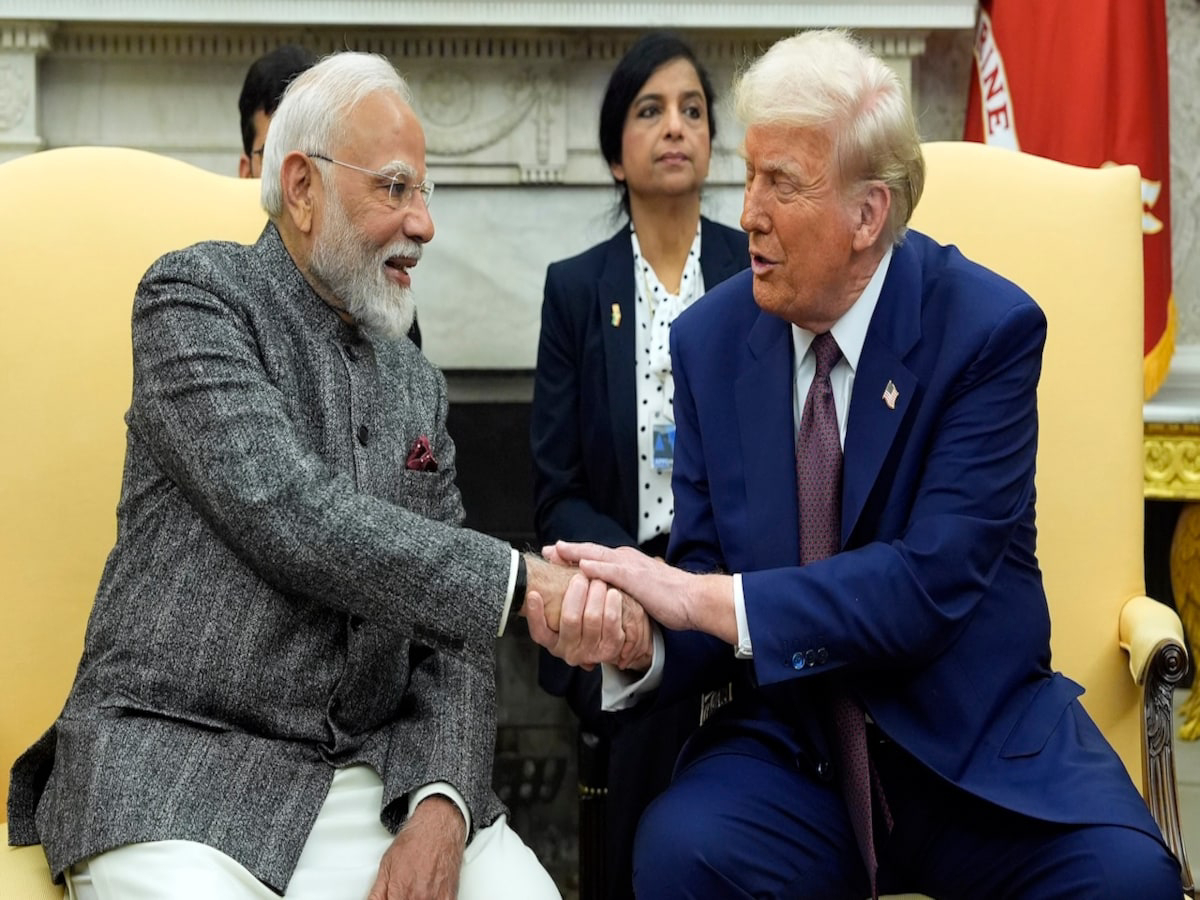
The Modi-Trump Meetings: A Diplomatic joy of Shared Aspirations Diplomacy often finds its most compelling narratives when personalities converge with purpose. The meetings between Indian Prime Minister Narendra Modi and former U.S. President Donald Trump stand as significant milestones in contemporary international relations. From their first handshake to subsequent engagements, the Modi-Trump meetings symbolized a complex yet evolving relationship between the world's largest democracy and its oldest. The Past: Foundations of a Strategic Partnership The first official meeting between Modi and Trump occurred in June 2017, when Prime Minister Modi visited Washington, D.C. The meeting laid the groundwork for a stronger strategic partnership, particularly in defense, trade, and counterterrorism. The joint statement released after their meeting emphasized a shared commitment to combating global terrorism, enhancing trade ties, and reinforcing the Indo-Pacific strategy. D...

Strengthening Indo-U.S. Relations: An In-Depth Analysis of the Modi-Trump Summit in Washington, D.C.

Image
Strengthening Indo-U.S. Relations: An In-Depth Analysis of the Modi-Trump Summit in Washington, D.C. Introduction: In a significant diplomatic engagement, Indian Prime Minister Narendra Modi and U.S. President Donald Trump convened in Washington, D.C., to deliberate on pivotal issues shaping the bilateral relationship between the world's largest democracies. The discussions encompassed a broad spectrum, including defense collaboration, trade dynamics, energy partnerships, and regional security concerns. This article provides a comprehensive analysis of the agreements reached, the strategic implications, and the future trajectory of Indo-U.S. relations. 1. Defense and Security Cooperation: The summit underscored a mutual commitment to bolstering defense ties, reflecting a shared vision for regional and global security. Key developments include: Advanced Defense Equipment and Technology Transfer: The U.S. has offered India the sale of Sea Guardian Unmanned Aerial ...

USAID: Achievements, Controversies, and Future Prospects

USAID: Achievements, Controversies, and Future Prospects The United States Agency for International Development (USAID) has been a cornerstone of U.S. foreign assistance since its establishment in 1961. Its mission is to promote global development, humanitarian relief, and democratic governance worldwide. Over the decades, USAID has played a crucial role in improving public health, fostering economic growth, and responding to crises. However, alongside its successes, the agency has also faced criticisms regarding its funding decisions, political influence, and alleged covert activities. Key Achievements of USAID 1. Global Health Initiatives USAID has been instrumental in combating major global health challenges. Through initiatives such as the President’s Emergency Plan for AIDS Relief (PEPFAR), the agency has helped millions access life-saving treatments. The President’s Malaria Initiative, launched in 2007, has significantly reduced malaria-related deaths, saving approximately si...